
Browse by category: Black & White · Landscape · Wildlife · Flowers ·
Acrylic, Aluminium Dibond, or Canvas: Which Material Suits Your Photo Print?
Acrylic, aluminium dibond or canvas? What each material does for a photo print, and how to choose the one that suits your photo and your room.
There's nothing quite like finding the perfect photo for your wall. Maybe it's a quiet landscape you can lose yourself in, or a powerful wildlife shot: a good print genuinely changes a room. But just as important as the photo itself is the material you print it on. And that's where I see people get it wrong more often than not.
I get this question all the time from buyers on the fence: "Erwin, what should I actually go for? Acrylic, aluminum dibond, or canvas?" The honest answer is that it depends less on personal taste and more on where the photo will hang and how much light hits that wall. Pick the wrong material for a sunny room, and you'll end up looking at reflections instead of your photo. To help you figure out which material fits your print, here's what I've learned from working with all three.
Why the Material Matters as Much as the Photo
As a photographer, I put a huge amount of care into composition, light, and fine detail. Once a photo is on your wall, you want every one of those details to come through exactly the way I saw them through the lens.
Light plays the lead role here. A glossy material on a wall that gets sun all day can turn into a mirror — you end up looking at the reflection of your window instead of the image itself, which is a shame for a print you love. On the other hand, a material like acrylic really comes alive in a shaded corner, where that depth can shine without competition. So the real question isn't "which material is best," it's "which material is best for your wall."
Photo Print on Acrylic: Depth, Gloss, and a Luxury Finish
Acrylic prints (also called acrylic glass or plexiglass) are stunning in person. The photo is mounted directly behind a thick, clear sheet of acrylic glass (plexiglass), so light passes through it and gives the image real depth. Colors pop off the wall, and dark areas turn rich and deep. It has that luxury feel you see in galleries and museums, which is why I reach for it often with my more colorful landscape work.
The one thing I always flag for buyers is light exposure. Acrylic is prone to glare. Hang it directly across from a large south-facing window, and during the day you'll mostly see the window frame reflected back at you. In a room with indirect daylight, or under directional spotlights, that same material comes fully to life.
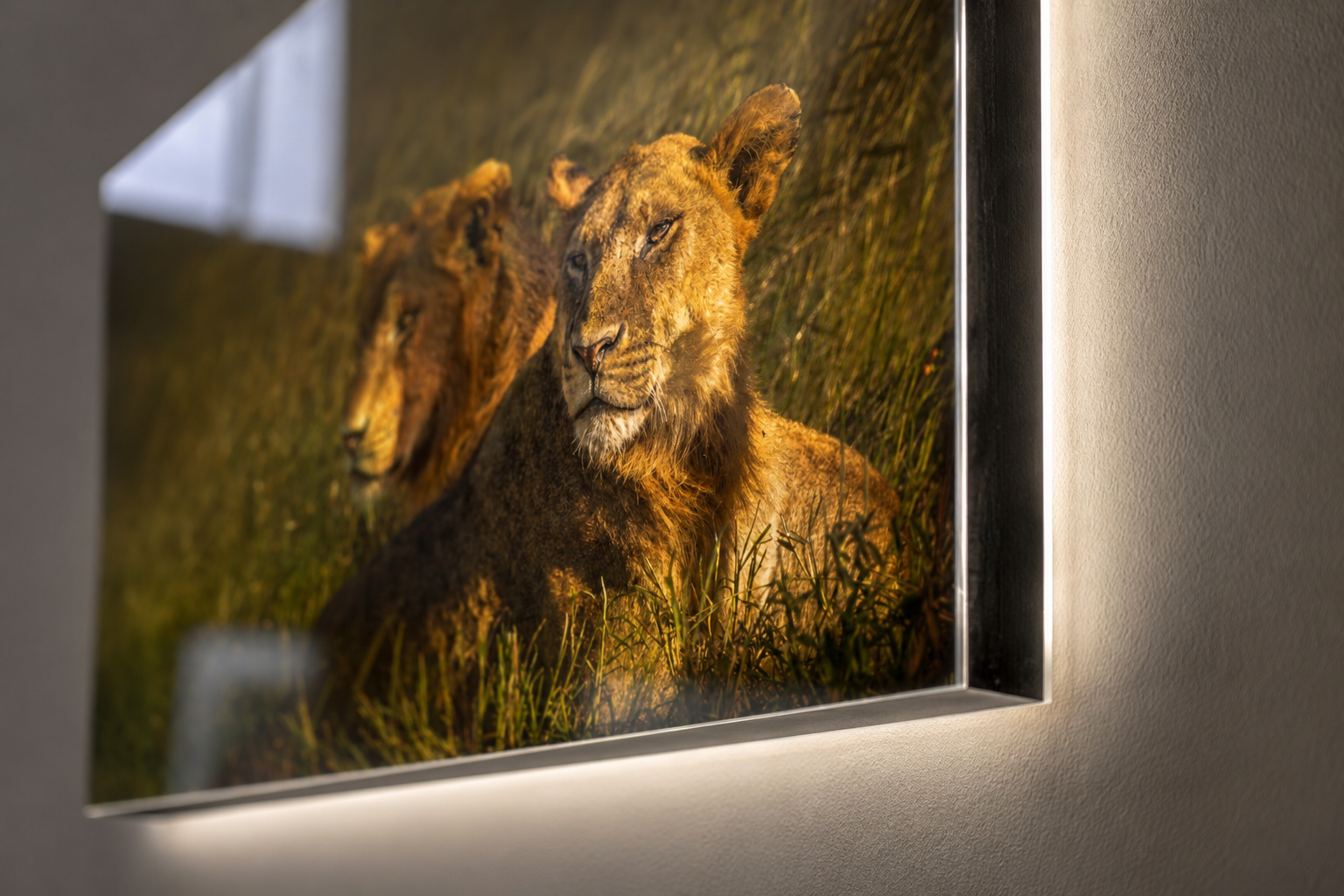
Close-up finished acrylprint
Effect: maximum color intensity, depth, and a gallery feel
Best for: walls with indirect daylight, or spotlit rooms
Ideal subjects: rich nature photography, colorful landscapes, and fine detail
Watch out for: avoid a wall directly facing a large south-facing window
Wondering if acrylic suits your image? Browse the landscape photography that works especially well on this material.
Photo on Aluminium Dibond: Sleek, Matte, and Glare-Free
Aluminium dibond is my personal favorite for a lot of my own work, especially black and white photography. The panel is made of two thin aluminum layers with a solid core in between. The finish is matte, rigid, and looks incredibly clean on a wall.
Where acrylic lives off light, dibond is the answer to it. It doesn't reflect at all. Wherever you're standing in the room, and however bright the sun gets, the image stays calm and sharp. That makes it the go-to choice for rooms with a lot of glass — think a living room with a bay window, or an office with a full glass facade. Black and white images take on a strength and character on aluminium that no other material quite matches, without ever feeling cold or corporate.
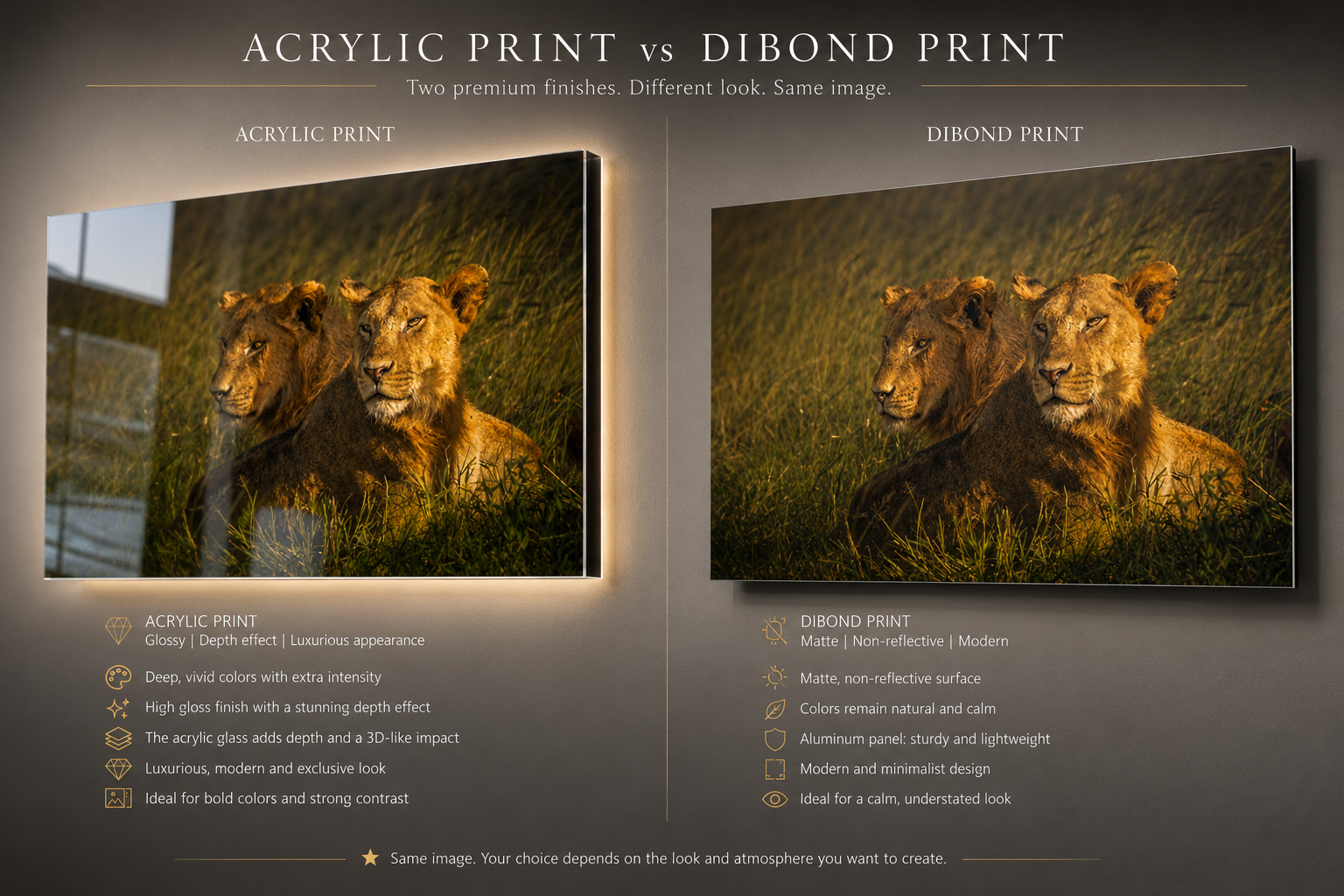
Same lion photograph on acrylic (left) and aluminum dibond (right) — same image, two very different finishes.
My black and white work and wildlife portraits come out best on this material.
Photo Print on Canvas: Warm, Atmospheric, and Classic
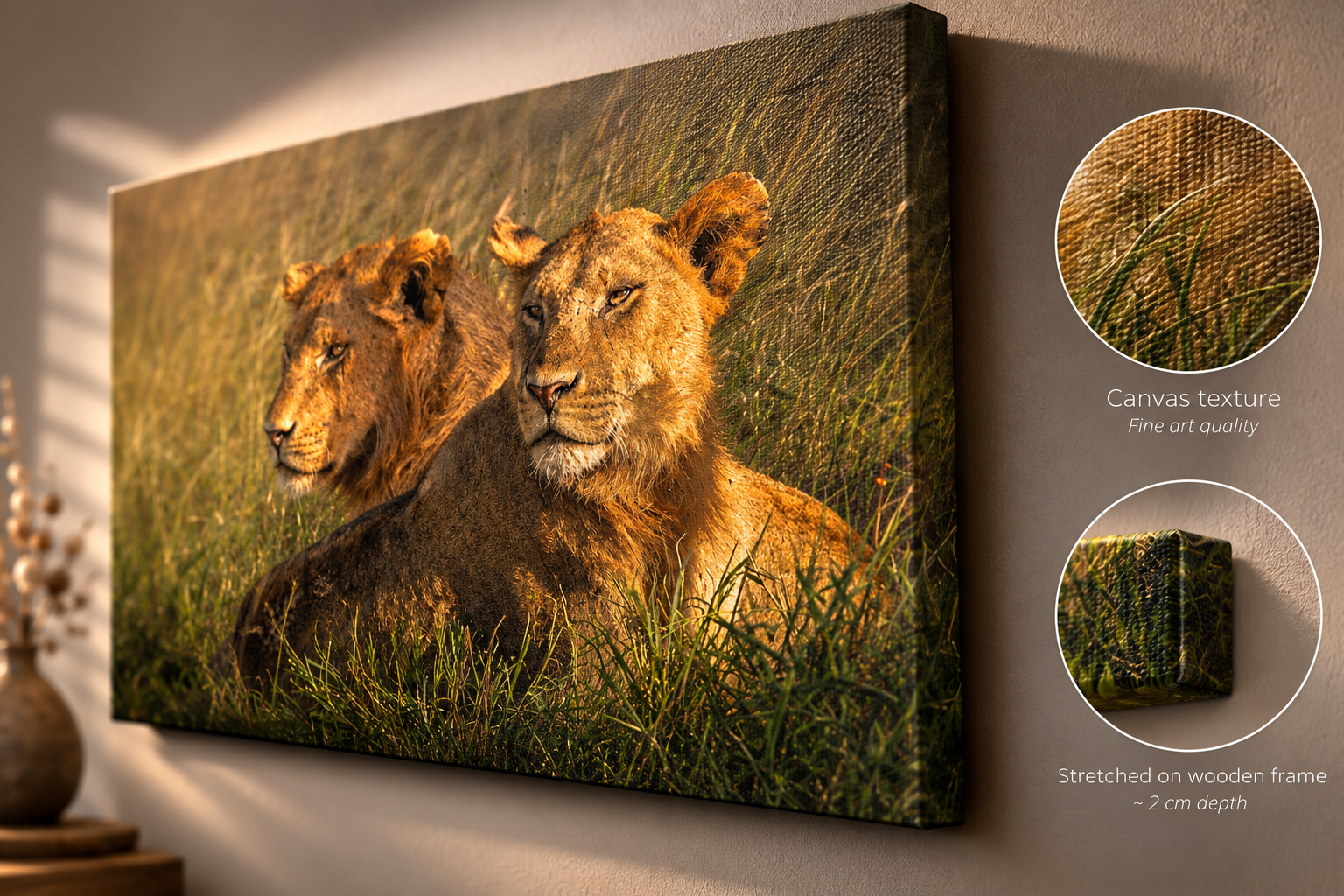
Canvas is the classic everyone knows: a print on cotton or linen fabric, stretched tightly over a wooden frame. The light texture of the fabric gives the print a softer, warmer feel than acrylic or aluminium. It doesn't reflect, and it brings a sense of warmth into a room almost instantly, making it a great fit for a farmhouse, Scandinavian, or classic interior.
One thing to keep in mind: the texture of the fabric softens very fine detail slightly. For an atmospheric landscape or a gentle nature shot, that's actually a plus, it reinforces the painterly feel. If a photo's strength lies in sharp, small details, I'd point you toward aluminium or acrylic instead.
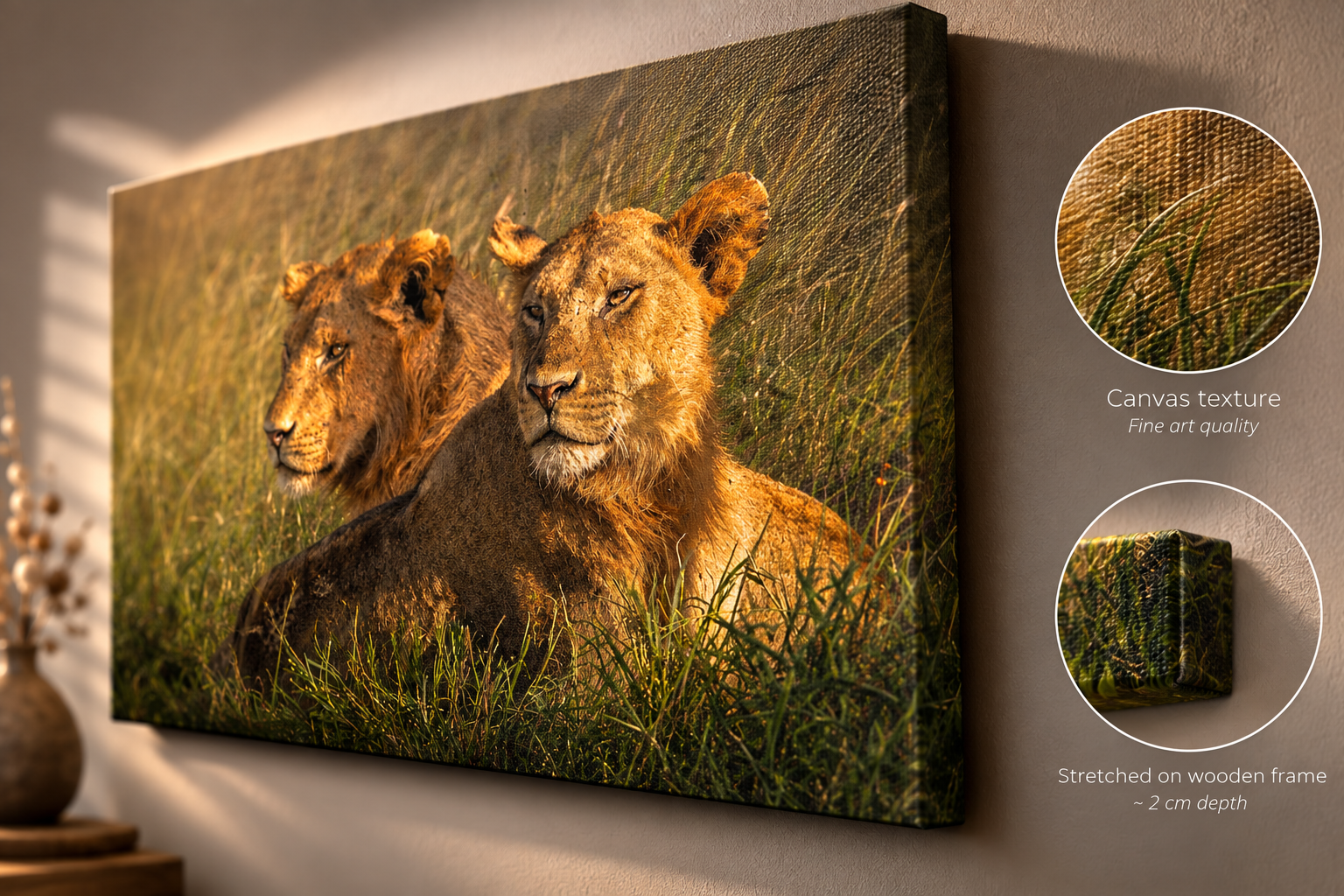
Effect: a warm, soft, painterly texture
Best for: farmhouse, Scandinavian, or traditional interiors
Ideal subjects: atmospheric landscapes and softer nature scenes
Watch out for: less suited when sharp detail is the main draw
For this softer feel, my landscape collection works especially well on canvas.
Quick Overview: Which Material Suits Your Wall?
Acrylic — Luxurious, deep, and glossy · Prone to glare · Best for colorful landscapes & fine detail
Aluminum Dibond — Sleek, matte, and modern · No reflection · Best for black and white photography & bright rooms
Canvas — Warm, soft, and classic · No glare · Best for atmospheric nature scenes & farmhouse interiors
Frequently Asked Questions About Material Choice
-
Acrylic is a thick, clear sheet of acrylic glass (plexiglass) with the photo mounted directly behind it, which creates depth and gloss. Aluminum dibond is a matte aluminum panel that has no gloss or reflection at all. In short: acrylic goes for impact, dibond goes for calm.
-
It can, especially if the print hangs directly across from a large window. With indirect light or spotlighting, this is rarely an issue in practice, and the depth effect comes through fully.
-
Aluminum dibond. It doesn't reflect, so even in a room full of windows, the photo stays clearly visible throughout the day.
-
Aluminum dibond. The matte, clean finish gives black and white images extra character and depth, with no competition from reflections.
-
That depends on the light in the room, not just personal taste. Lots of direct sunlight: go matte (dibond). Little direct light or spotlighting: gloss (acrylic) will come into its own.