
Browse by category: Black & White · Landscape · Wildlife · Flowers ·
What size wall art fits your wall? The complete sizing guide
A print that looks bold on your screen can disappear on a large wall. How to pick a size that fits your wall and room, and avoid the most common mistake: going too small.
You found the perfect photo. Big on your screen, it's striking — the detail, the color, the mood. You order a print, hang it up... and somehow it disappears against the wall. Not because the photo isn't good, but because the size doesn't work.
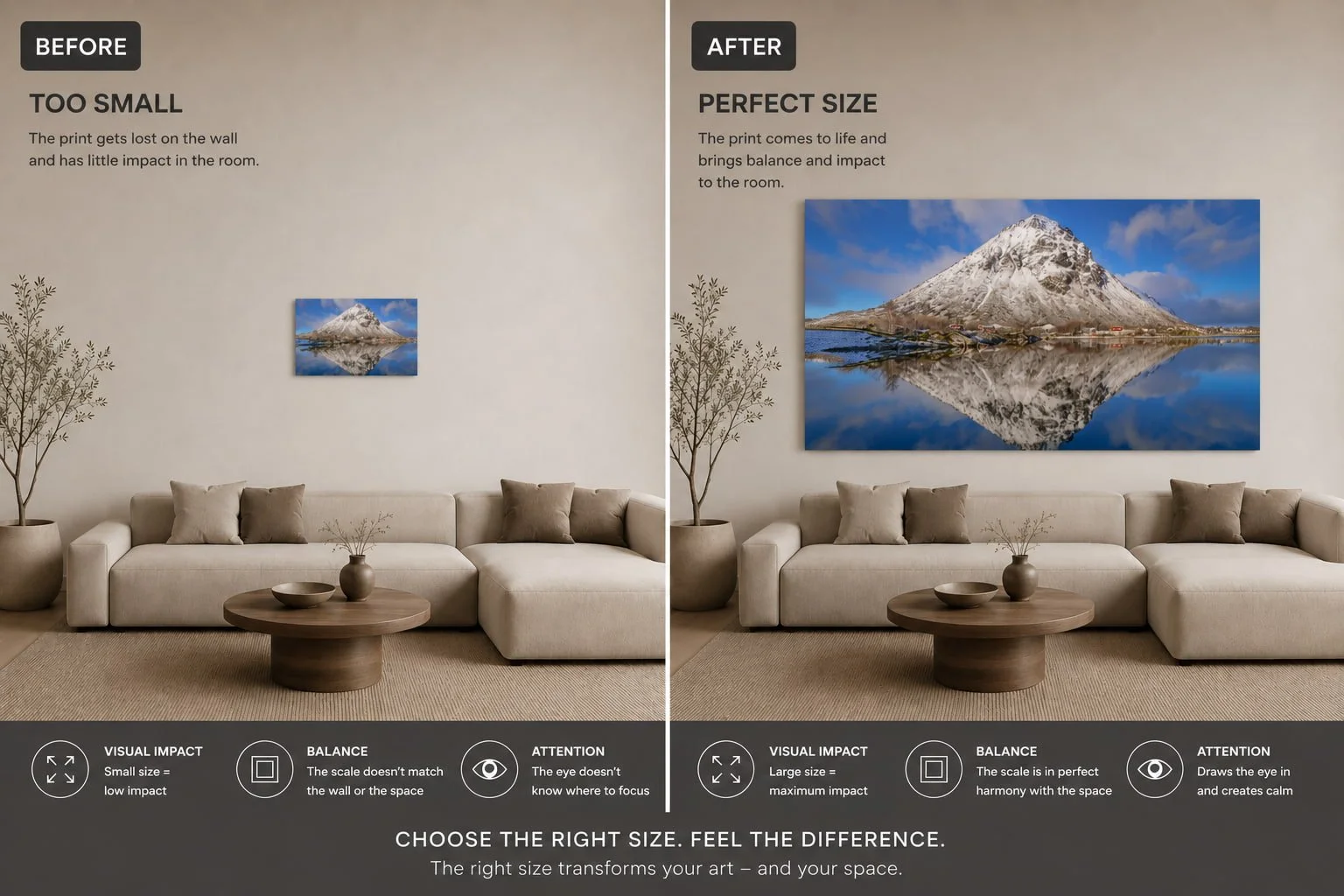
This is the most common mistake when buying wall art: sizing too small. A print that feels bold on your phone or laptop can turn into a postage stamp on a three-meter-wide living room wall. It's an easy regret to avoid — once you know what to look for.
Why size matters more than anything else
Of all the choices you make when buying a print — material, color, style — size has the biggest impact on how a piece feels in a room. Too small, and it becomes decor you stop noticing after a week. The right size becomes a statement: something your eye is drawn to, that brings calm or energy to the room.
The difference rarely comes down to the photo itself. It comes down to scale.
The basic rules of thumb
A few simple guidelines will get you most of the way there, even before you pick up a tape measure:
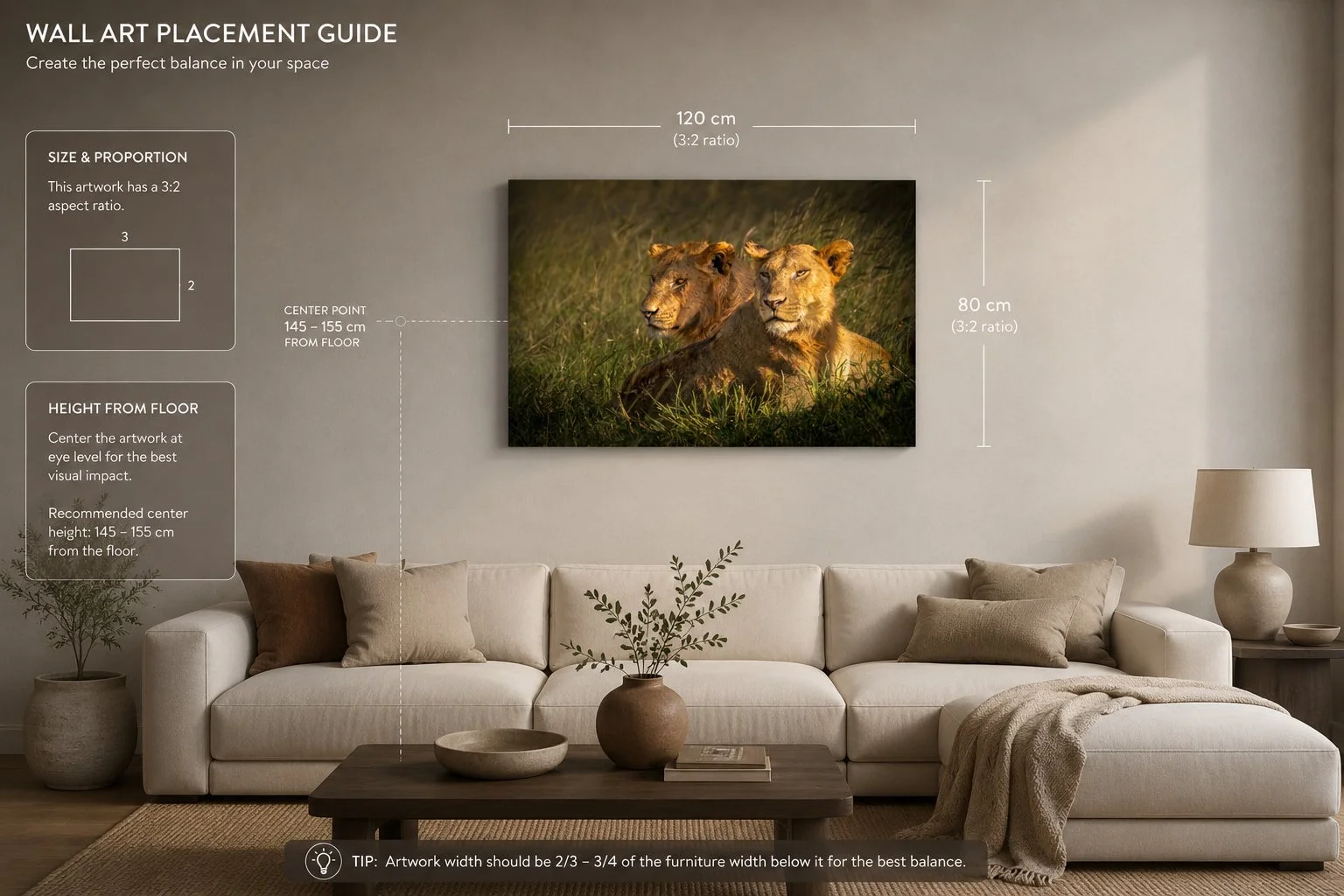
Above a sofa or console table: aim for a width around two-thirds to three-quarters of the furniture below it. Too narrow and it looks lost, too wide and it overwhelms.
Eye level: the center of your print should sit around 145–155 cm from the floor — standard gallery height. Above a sofa, a touch higher works, since you're usually viewing it seated.
Wall coverage: a print filling roughly 60–75% of the available wall space feels balanced. Less, and the image gets lost. More, and it can start to overpower the room.
These rules are a starting point, not a strict formula — but they'll help you avoid the two most common mistakes: sizing too small, and hanging too low.
The subject of the photo matters too
Size isn't only about wall width. What's actually in the photo plays just as big a role in what size works.
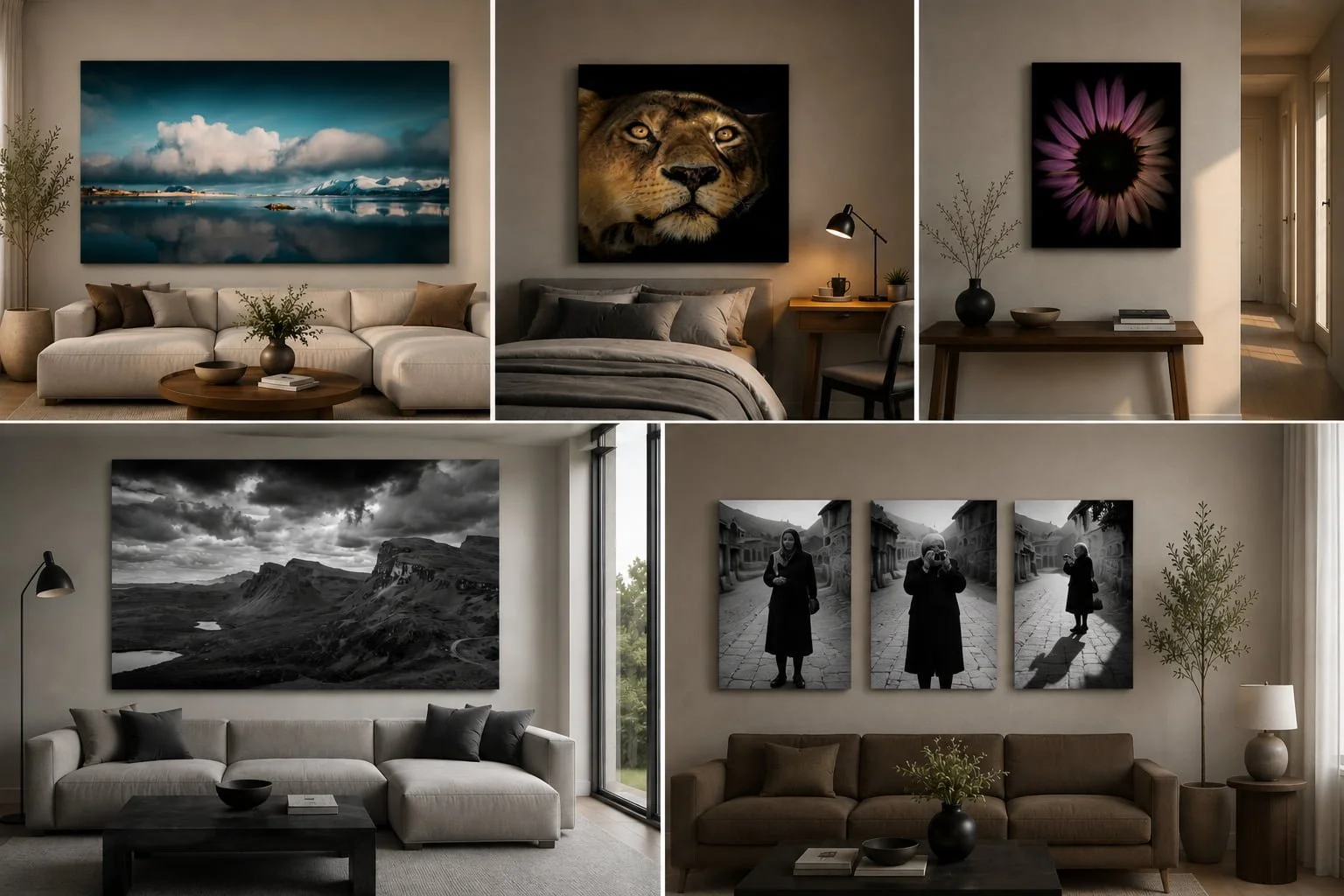
Wide, open landscapes — a misty fjord, a quiet plain — need room to breathe. Too small, and that sense of openness gets lost. These pieces actually get stronger the larger they hang.
Wildlife portraits with direct eye contact don't need that same space. A medium size often already carries plenty of impact — go too large, and a gaze that should feel captivating can start to feel confrontational instead.
Macro shots, like a close-up of a flower, invite you to look closely. The detail is the draw, not the scale — these work well at a smaller size, for instance in a hallway or above a console table.
Minimalist black-and-white images with a lot of negative space benefit from going large: the bigger the print, the stronger the sense of quiet.
Series, a set of related images, don't work as one large piece but as a group of smaller sizes hung together — the impact comes from repetition and spacing, not from individual scale.
The right size for each room
The same photo can call for three different sizes in three different rooms:
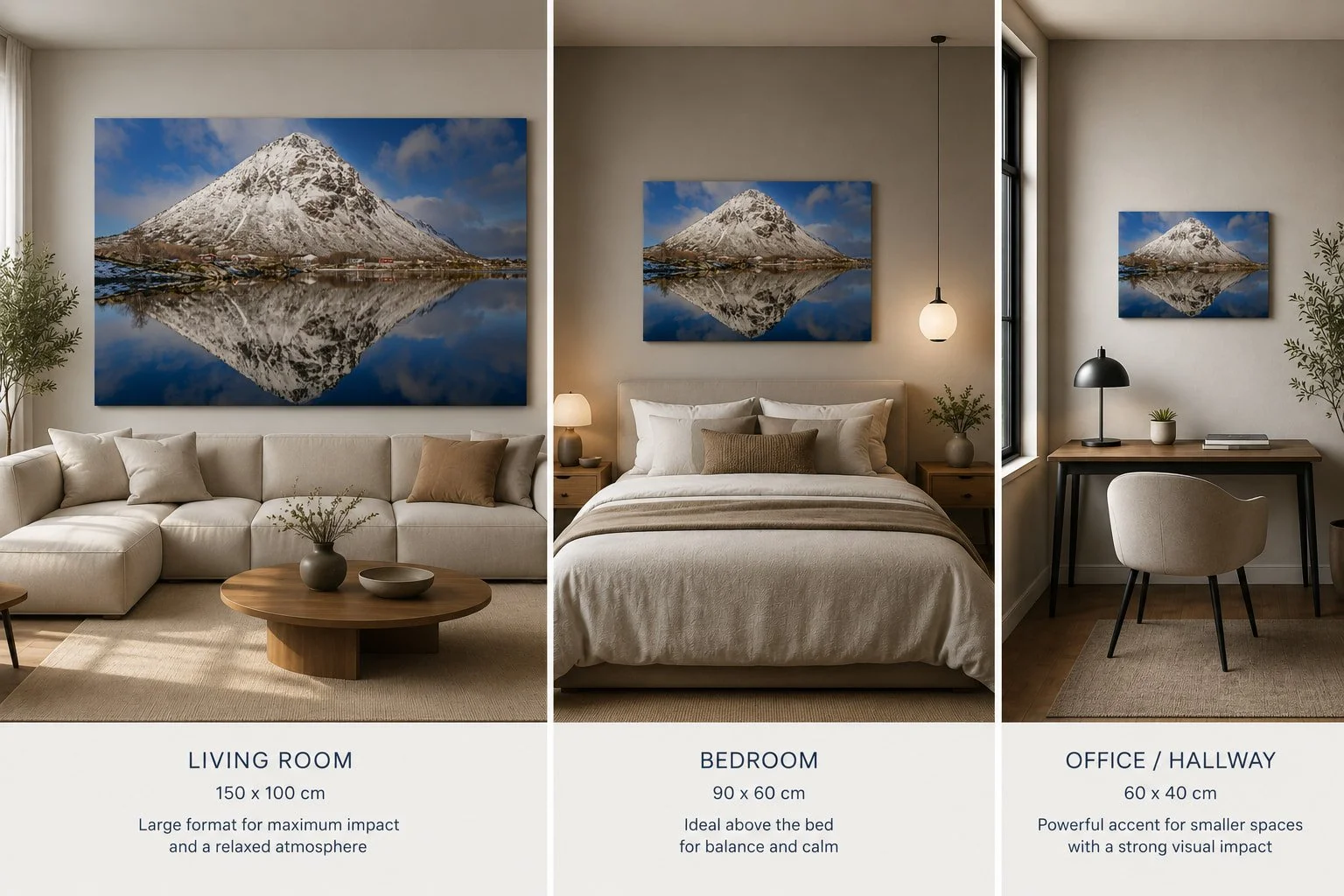
Living room: this is where you can think big. Above a sofa, a large size (150 x 100 cm or more) is often exactly what the room needs for a relaxed, cohesive feel.
Bedroom: above the bed, a slightly more modest size tends to work better — large enough to have presence, small enough to keep the room calm. Around 90 x 60 cm is a common starting point.
Office or hallway: these spaces often have less wall to work with, but that doesn't mean less impact. One strong piece at a smaller size (60 x 40 cm) can stand out more in a narrow space than a larger piece that doesn't fit.
Measure your wall before you buy
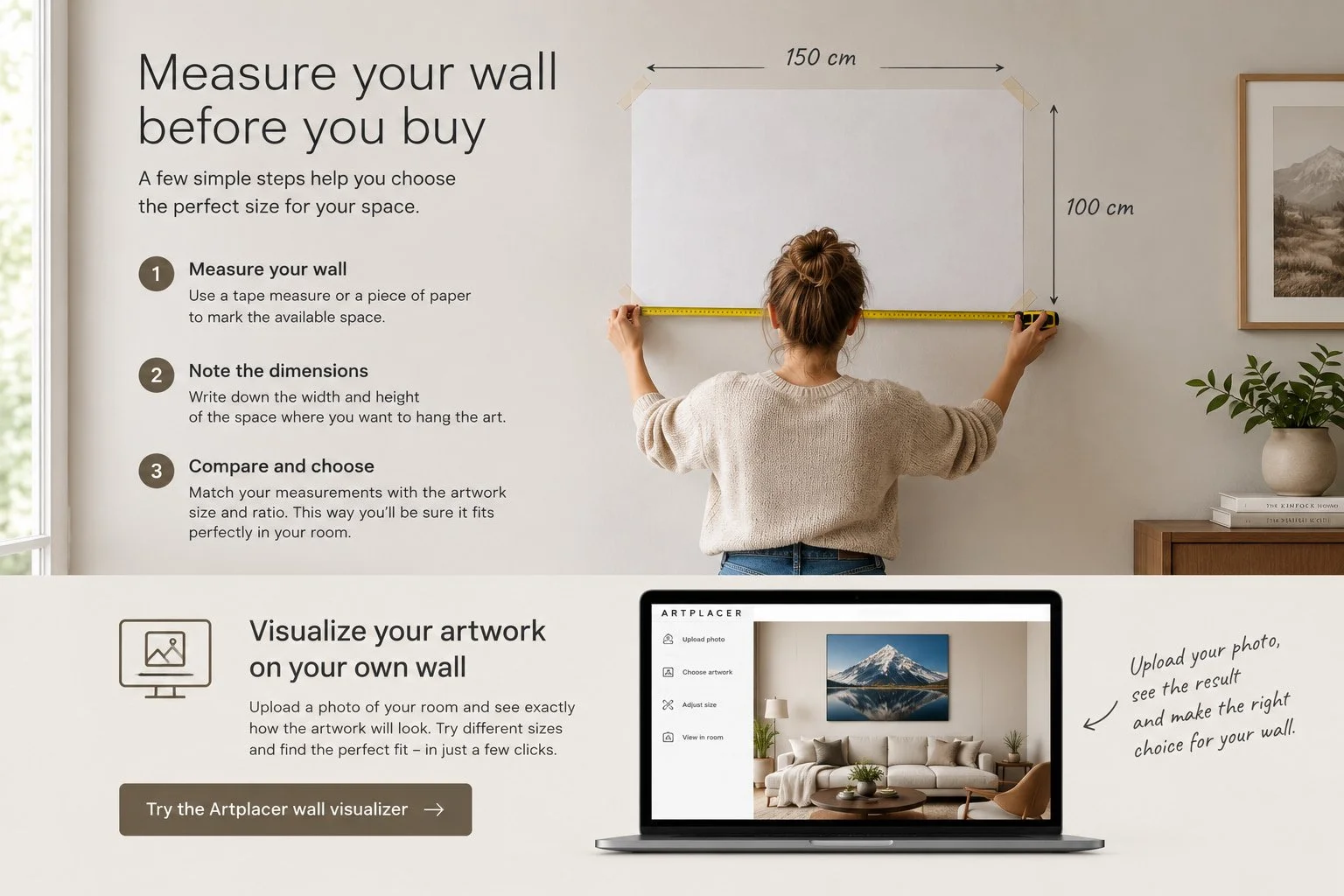
Before choosing a size, grab a tape measure. It takes five minutes and saves you a return
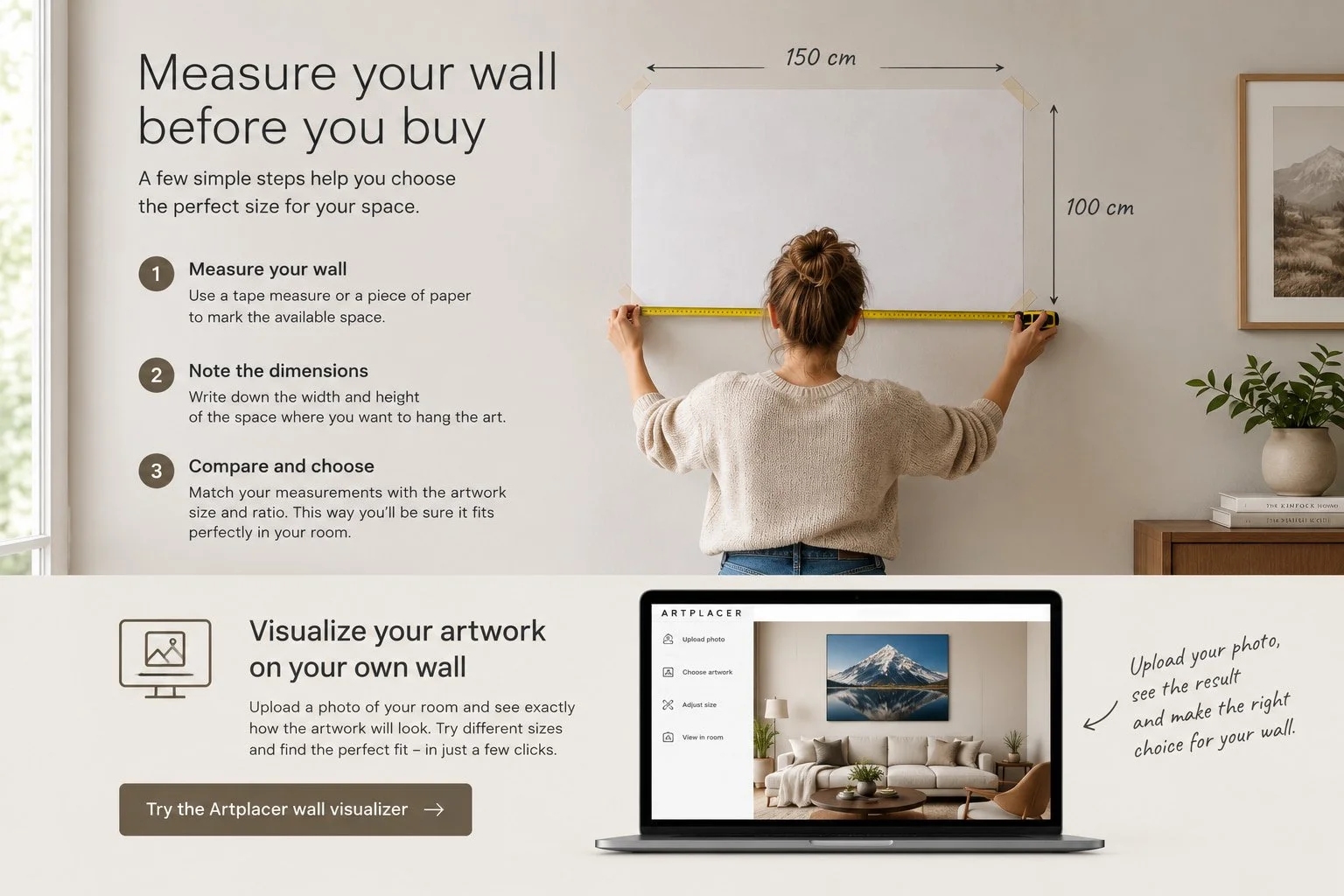
Use this link for Artplacer
Measure your wall. Use a tape measure, or tape a large sheet of paper to the spot where the print will hang, at the size you're considering.
Note the dimensions. Width and height of the available space, plus the height from the floor.
Compare and choose. Match your measurements against the sizes available — not against whatever the largest option happens to be.
Want to see exactly how a print will look on your own wall before you order? Upload a photo of your room to the [Artplacer visualizer] and preview different sizes in your actual space.
Material changes how large a print feels
There's one more factor that's easy to overlook: material and finish affect how big the same size actually feels on the wall.
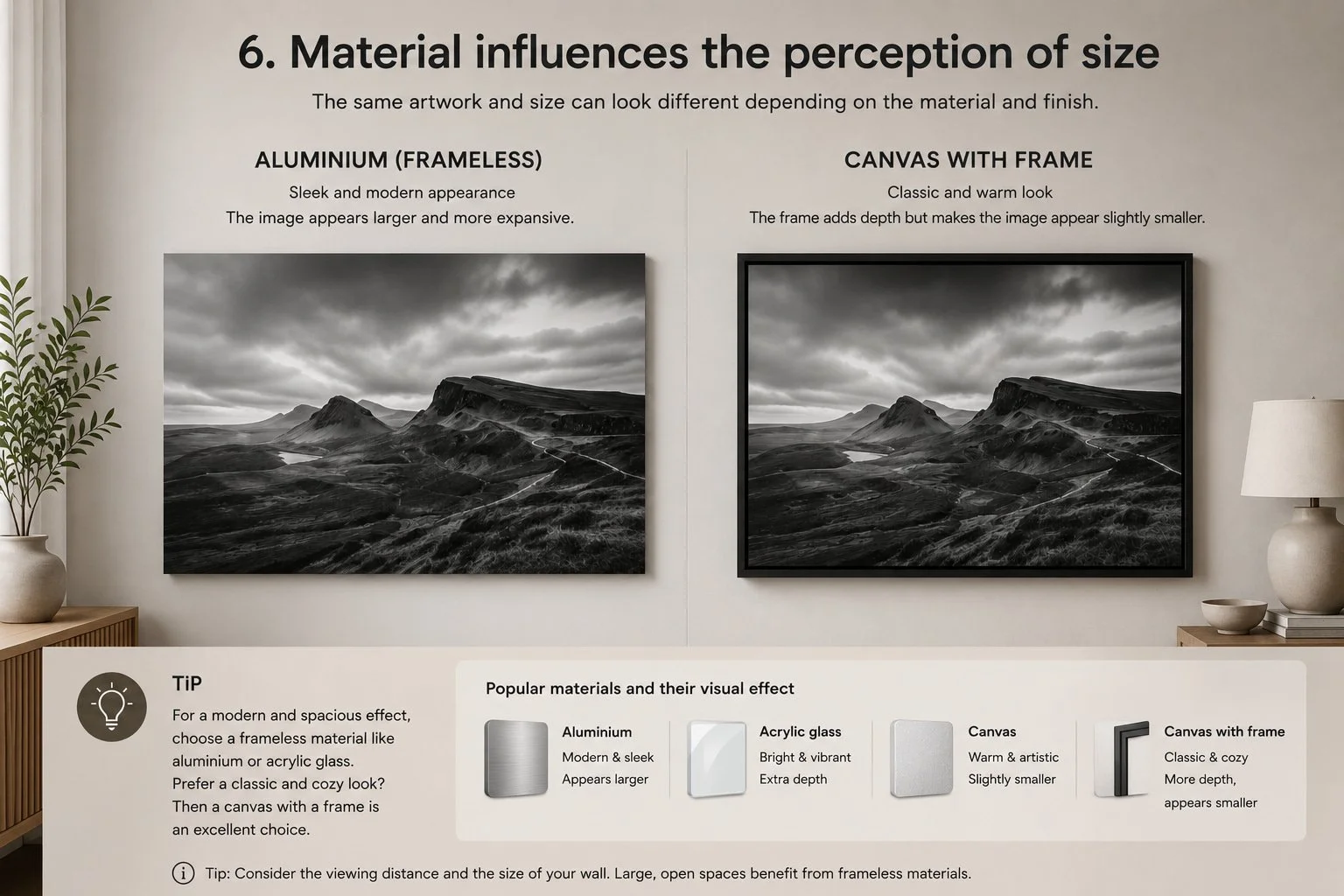
A frameless print on aluminum or acrylic runs edge to edge — the image fills the entire space it occupies, which reads larger and more modern. Canvas with a frame adds depth and a classic, warm feel, but the frame visually pulls the image inward, so the same size ends up reading just slightly smaller.
Neither is better — it comes down to the feel you're going for. In a large, open space, a frameless material tends to make the strongest statement. In a more classic, cosy interior, framed canvas fits naturally. (For more on the materials themselves, see our guide to print quality and materials.)
Choose deliberately, not by instinct
The right size for your wall art isn't about going as big as possible, or picking whatever happens to be available — it's a combination of your wall, your furniture, the subject of the photo, and the material you choose. Take five minutes to measure before you order, and you'll avoid the most common regret in wall art.
Working with clients on interior projects?
Visit our For Professionals page for tailored sizing and material advice.
Browse by category to find a size that fits your space:
Browse our other photo pages
Flowers - Landscape - wildlife - black & white - digital art