
Browse by category: Black & White · Landscape · Wildlife · Flowers ·
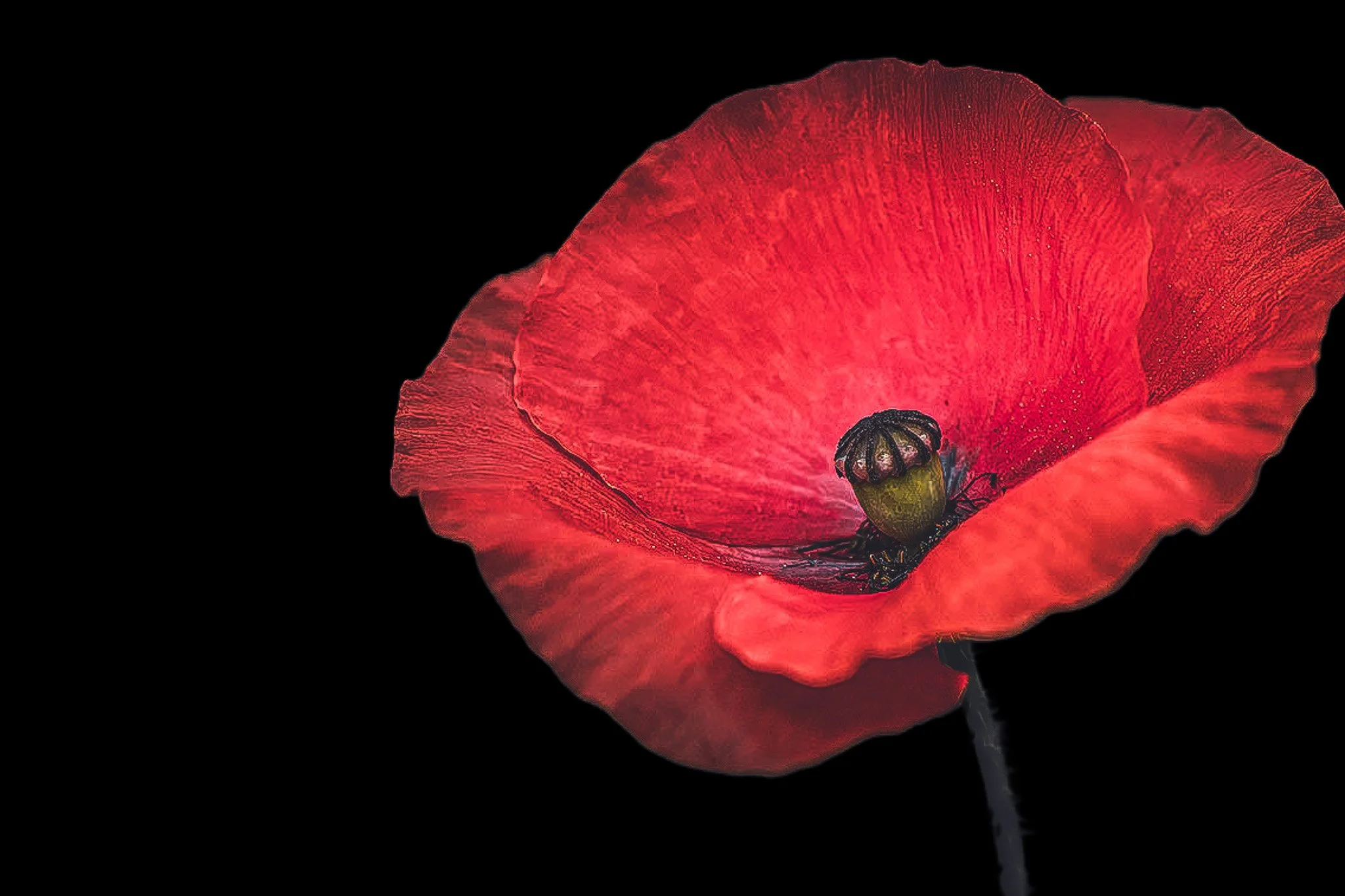
How I Photograph Flowers (And Why You Don't Need to Travel to Find Them)
People ask me this more than almost anything else: how do you get flower photos like that? The honest answer is less about gear and more about patience — but the gear helps too, so here's both.
I shoot flowers with a Sony A7 III, and more recently the A7 IV, paired with the Sony 90mm macro lens. That combination is what lets me get close enough to fill the frame with a single bloom while keeping the background soft and out of the way.
Before I even pick up the camera, I spend time just looking — walking around a flower from different angles, checking how the light falls, seeing what's behind it. A flower can be perfect and still make a forgettable photo if the background is cluttered or busy. Finding the angle where the flower stands out and the background goes quiet is most of the work, honestly. Once I've found that spot, I take several shots from slightly different angles and heights — the difference between an okay photo and a good one is often just a few centimeters of camera position.
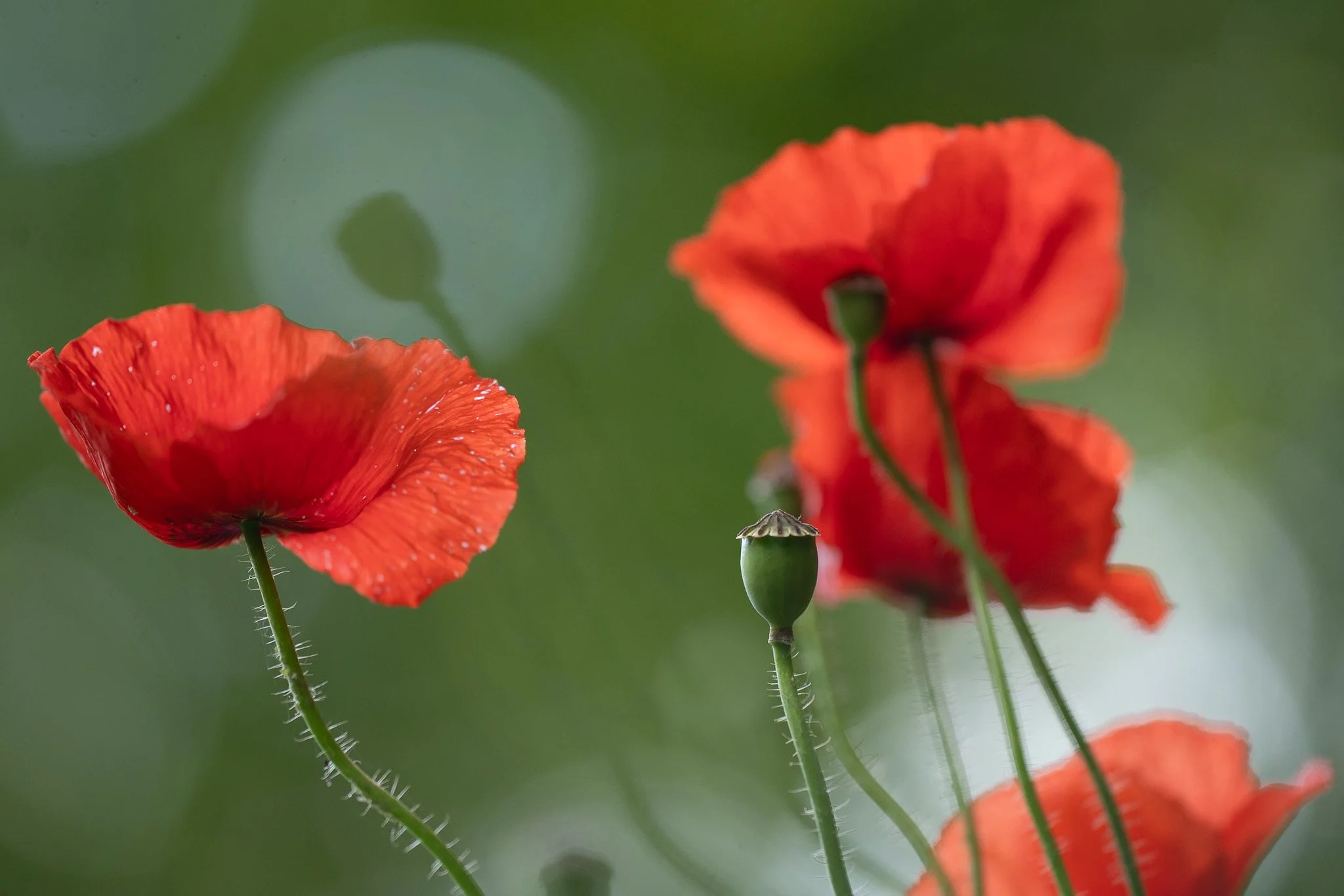
Close-up of red poppy flowers backlit by sunlight with a green bokeh background, botanical fine art print
I shoot early morning or early evening, when the light is softer and more directional — harsh midday sun flattens everything and blows out the delicate parts of a petal. A tripod helps for precision, though I shoot handheld just as often; macro work rewards small, quick adjustments more than it rewards perfect stability.
Technically, I keep the aperture wide — around f/2.8 — to get that soft, blurred background, and I keep ISO low, 100 or max 200, since I'm usually shooting in good light anyway. Wide aperture means a very thin plane of focus, so precise positioning matters even more.
Editing is minimal if the shot is right in-camera. Mostly in Lightroom I'll push the colors slightly to bring out what the flower already had in real light. Occasionally I'll run a file through DxO afterward for a touch of extra sharpness, but that's the exception, not the rule.
Here's the thing most people don't expect: you don't need Costa Rica or Tanzania for this. Look in your own garden, if you have one. Or just the street where you live. Slow down and actually look — I'd bet you'll start noticing spots you've walked past a hundred times without seeing.
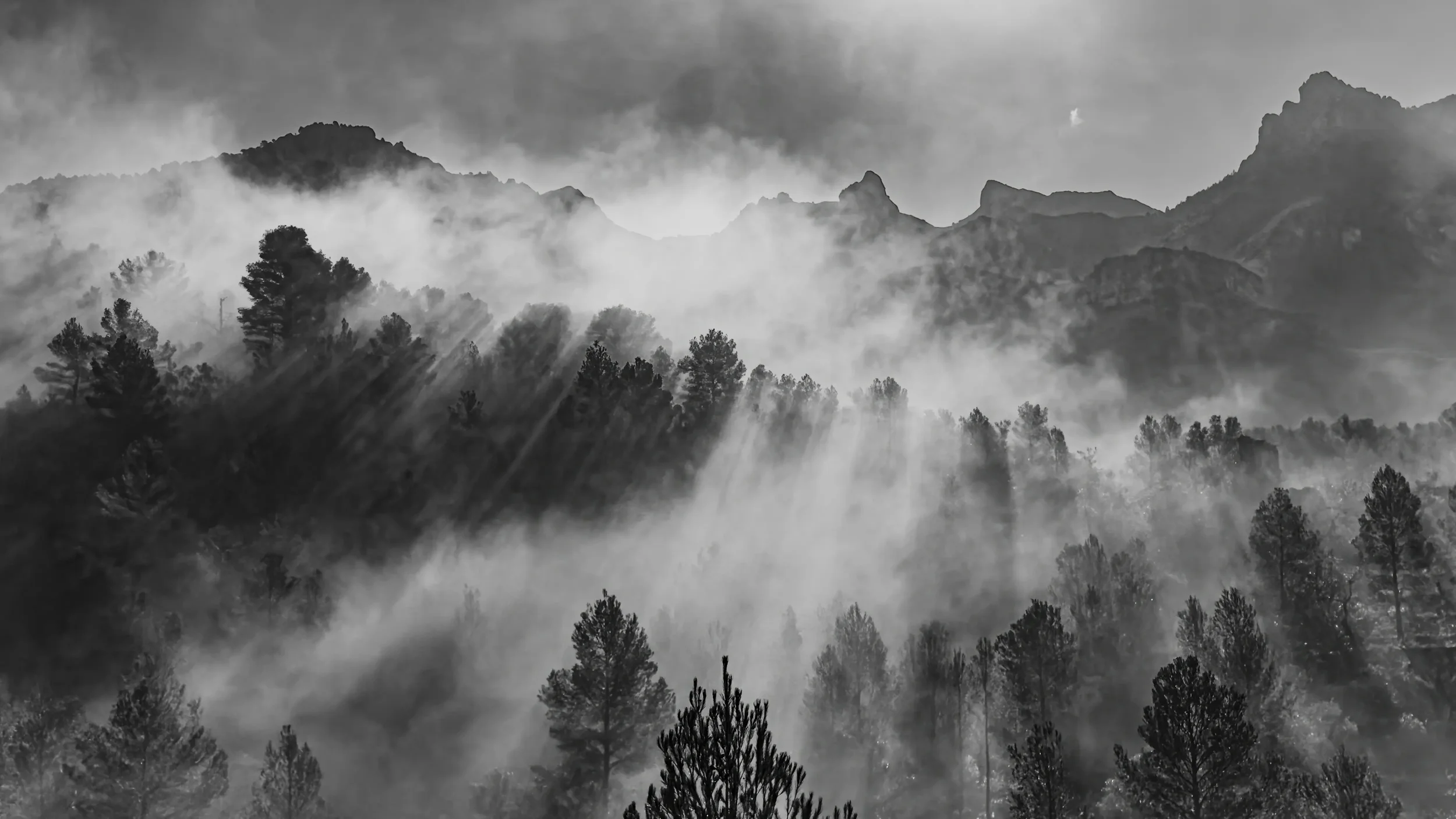
First Light After the Storm
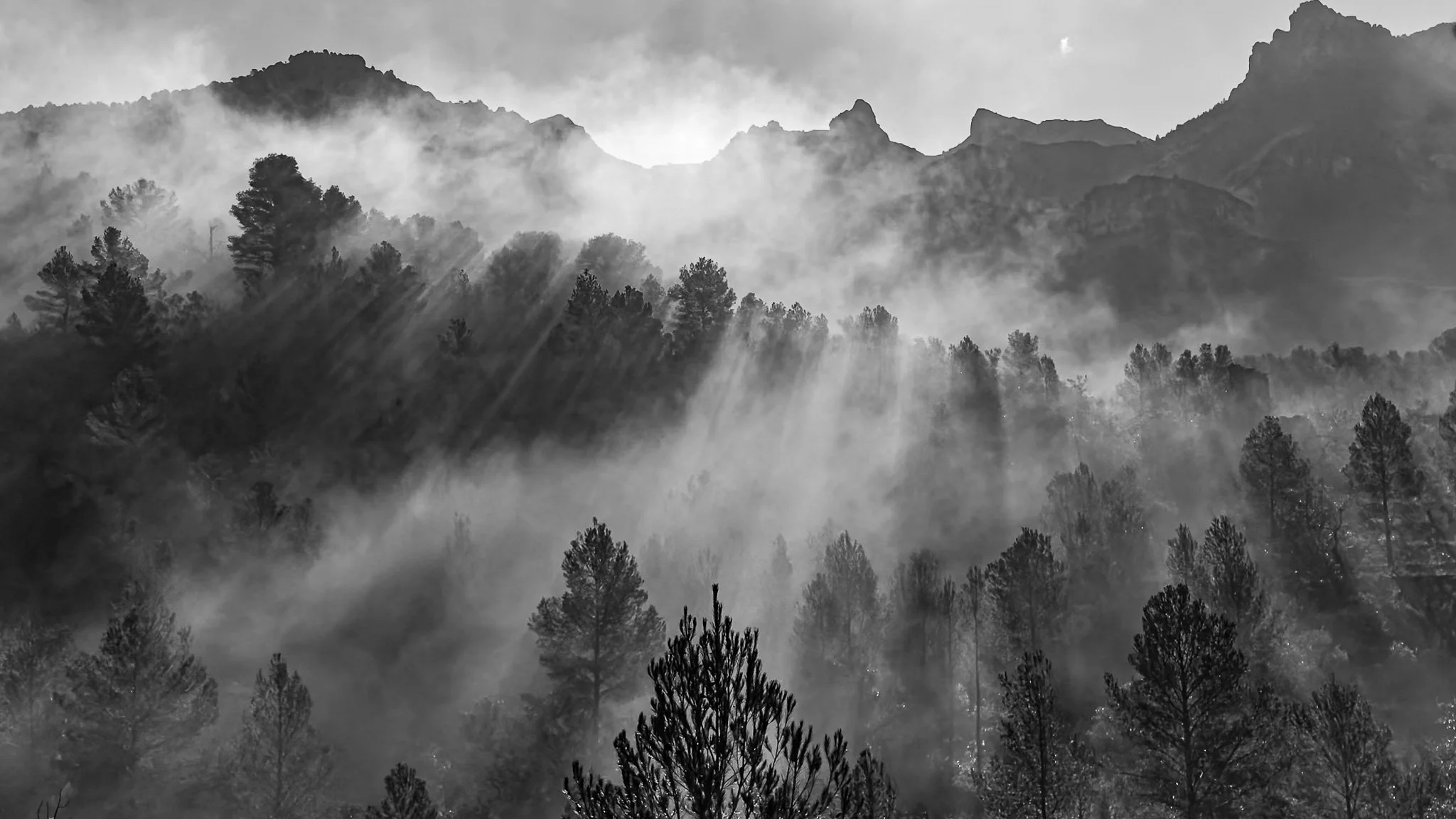
Black and white photo of sunlight breaking through misty mountain forest, wall art print
The road into Costuma valley had been closed for days. Storm Dara had turned the dirt tracks up into the mountains near Benifallet into something closer to riverbeds than roads — and my house up there runs entirely off-grid, so getting back in isn't optional, it's how the solar panels, water tanks, and septic system get checked after weather like that.
The first morning the road was passable again, I drove up before sunrise. I wasn't chasing a shot — I just wanted to see the place after the storm. But as I came around the last bend, the valley was doing something I hadn't seen before: steam rising straight off the drenched forest, and the sun breaking over the ridge right through it. I stopped the car and grabbed the camera before the light changed.
That's the thing about storms — they leave the air completely still afterwards, and still, wet air is what turns ordinary sunlight into something you can see moving. Ten minutes later, the mist had burned off and the moment was gone.
I shot this one in black and white. Color would have shown you a green valley on a grey morning — accurate, but forgettable. Stripped down to just light and shadow, what's left is the shape of the rays themselves, cutting through the trees like something solid. That's what stopped me in the first place, so that's what the photo needed to keep.
Same morning, same stretch of road, I also found an old farmhouse — abandoned years ago, roof half gone, standing alone in the same mist. That image ended up running full-page in ZOOM magazine a while later. Different subject, same storm, same light.
This house has no power line, no water main, nothing connected — everything up there runs on what the sun and the tanks provide. Mornings like this one are the reminder of why that trade-off is worth it.